
Omoda & Jaecoo Digicars
The dual-brand site that opened up the design system
Omoda & Jaecoo Digicars brings two brands into one dealership website, with a public presentation serving Sandton, Northcliff and Melrose Arch. We built it on the group platform, but its design also marked an important step in the evolution of that platform’s frontend.
The public website and its main journeys
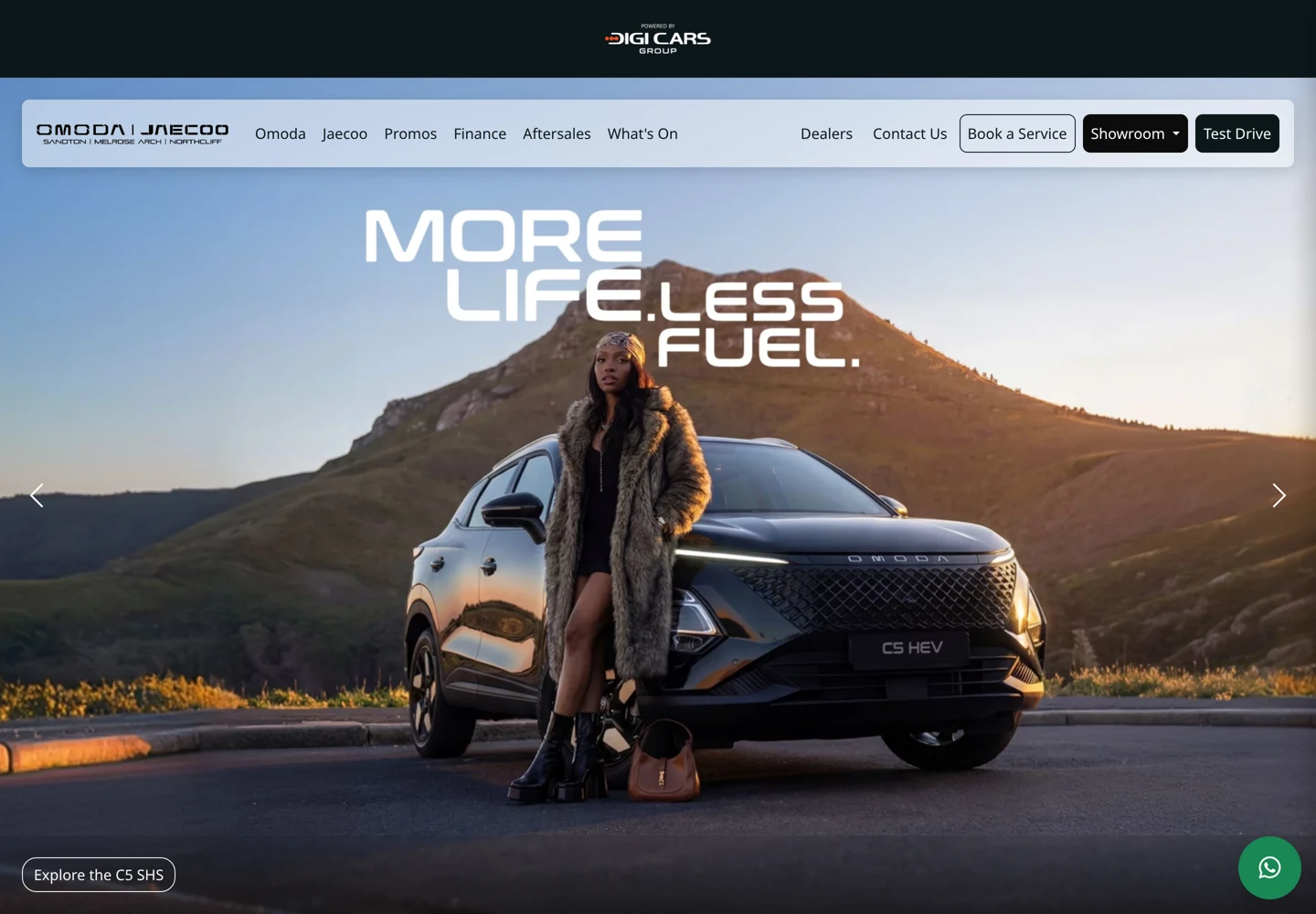
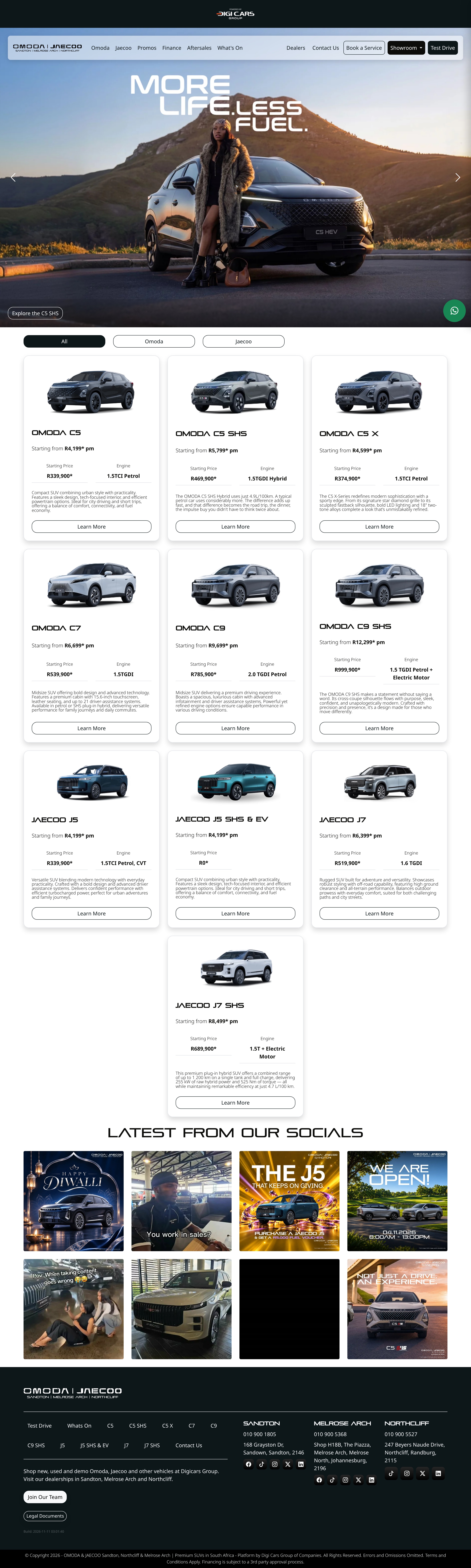
The homepage makes the dual-brand structure visible through Omoda and Jaecoo navigation, a large campaign-led opening and separate vehicle routes. The captured pages show a different presentation from the earlier shared template layouts. It is still connected to the same operating foundation, while the public design has more freedom to express the two brands.
The addition of Omoda & Jaecoo helped turn the Bootstrap-based template system into an open design system. That change is central to this project’s story: the shared frontend foundation could support a broader design language as the estate grew. The website demonstrates that evolution through its navigation, vehicle presentation and overall page composition.
Model pages within a common publishing system
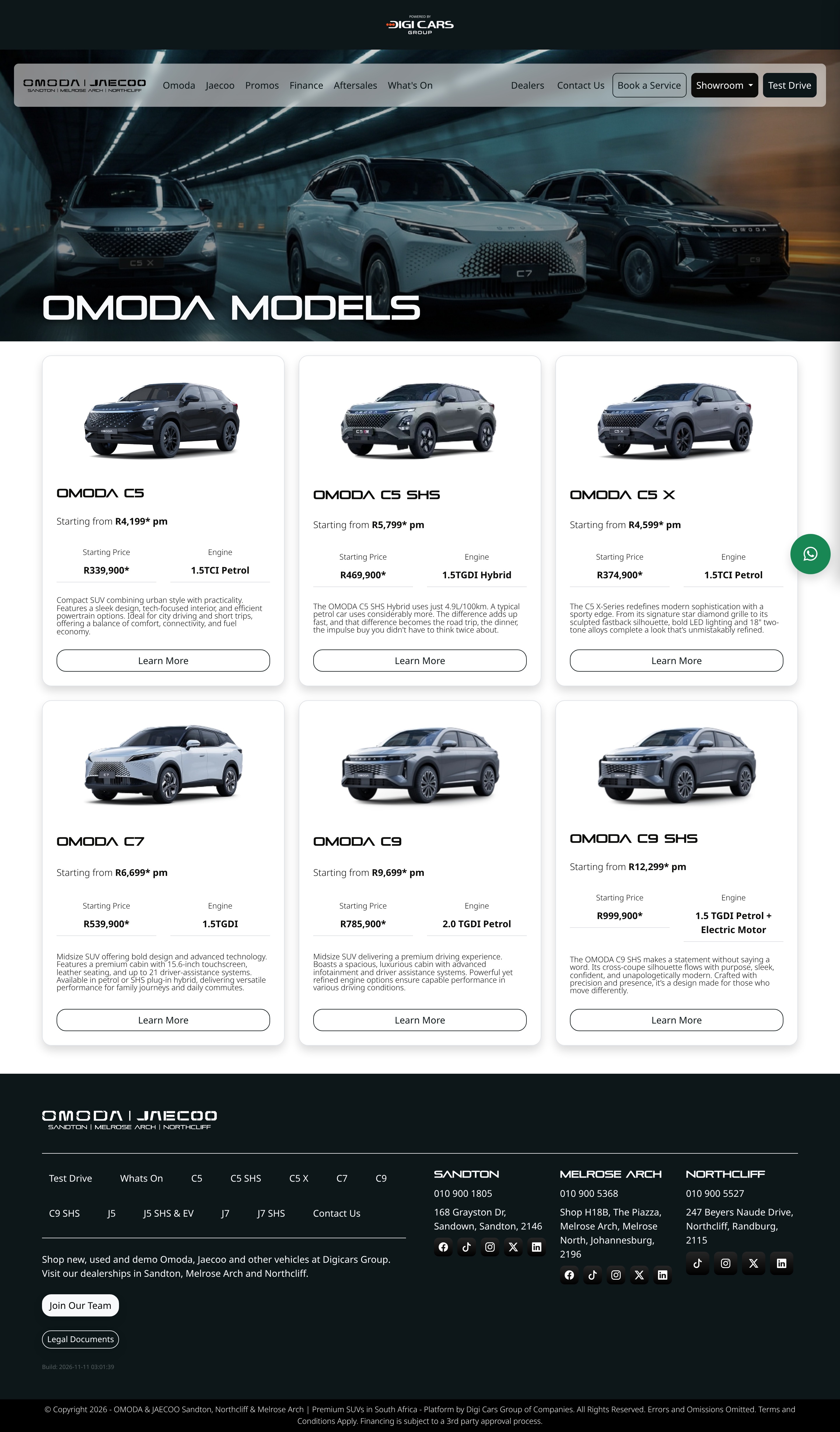
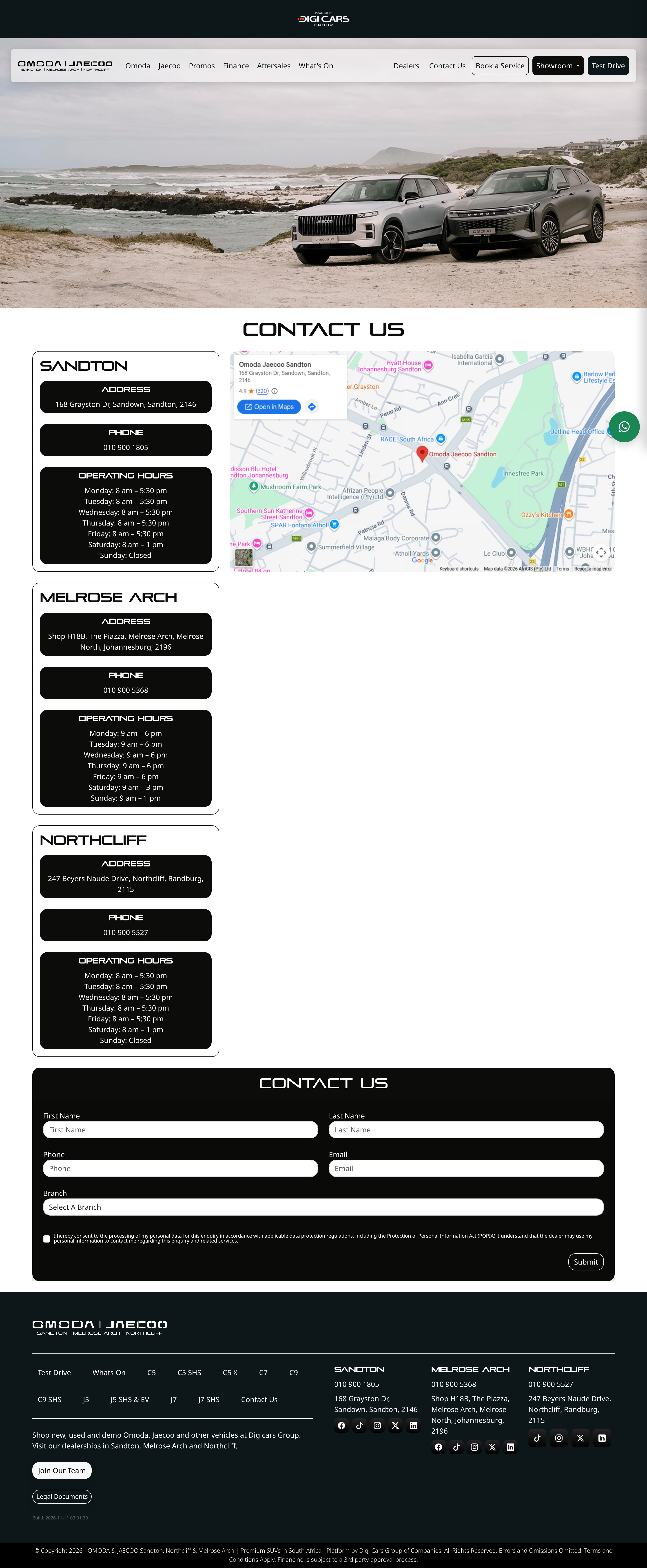
The model, stock and contact captures make the distinction practical. The model pages introduce the range, the vehicle listing gives individual stock a place in the browsing journey, and the contact destination serves the dealership locations. The two-brand presentation still needs the same connected publishing, stock and lead-management processes as the rest of the group.
Standardising the model pages was one of the largest challenges across the Digicars Group programme. Different brands had to work within a common system for managing and presenting their model content. The aim was to make that content maintainable across the estate while allowing the public websites to retain their own brand presentation.
Inside the Omoda C5 model page
The Omoda C5 capture makes the design-system change especially clear. It combines a full-width vehicle introduction with specification highlights, alternating feature layouts, larger interior imagery, model pricing and a test-drive form. The page moves between compact technical information and expansive visual sections, giving the dual-brand website a different rhythm from the earlier common templates.
It is also a concrete example of the model-page work behind the programme. The website needs to carry a model’s presentation through to its commercial and enquiry sections, while remaining connected to the same group content and lead-management foundation.
Content and stock behind the frontend
WordPress serves as the central backend for content, stock and lead management. Our custom PHP library renders the public frontend into static HTML. Bootstrap and the shared design system provide the frontend foundation, with PHP handling the forms and their connection to the lead interceptor.
The group also needed to accommodate stock feeds from different dealer-management systems. Integrating those feeds was the other major technical challenge in the programme. The vehicle listings in this gallery show the public side of that work: individual vehicle content presented through a consistent website structure. The Digicars Group platform project explains the shared architecture in more detail.
A website enquiry inside a wider lead process
The site’s forms connect to the interceptor system. It gives the group one endpoint for website, QR, social, paid-media and manually captured leads, then pushes leads to the relevant lead-management, CRM and dealer-management destinations in real time. The downstream systems can be configured for each dealership.
That makes the website part of a wider enquiry process. A visitor sees a local dealership experience, while the group can connect that enquiry to the systems the dealership uses. The shared endpoint supports leads arriving through other channels as well as those originating on the website.
Ongoing copywriting and maintenance
Omoda & Jaecoo Digicars receives monthly SEO copywriting and a full website maintenance plan. The relationship continues after the initial build, supporting the public site and its content as the dealership uses it for organic acquisition and paid-media landing journeys.
That arrangement is part of the delivered scope for this website. It gives the project an ongoing content and maintenance component alongside the shared platform and integrations. The HeyCarter sites have their own once-off build and model-page maintenance arrangement.
Launch performance and the site’s business role
The group rollout began in November 2026 with nine brands and has continued in phases. We targeted and achieved 100 in performance, accessibility, best practices and SEO in Lighthouse at launch. Across the dealership websites, organic enquiries make a substantial contribution to the business, and the sites also serve as landing destinations for a large paid-media strategy.
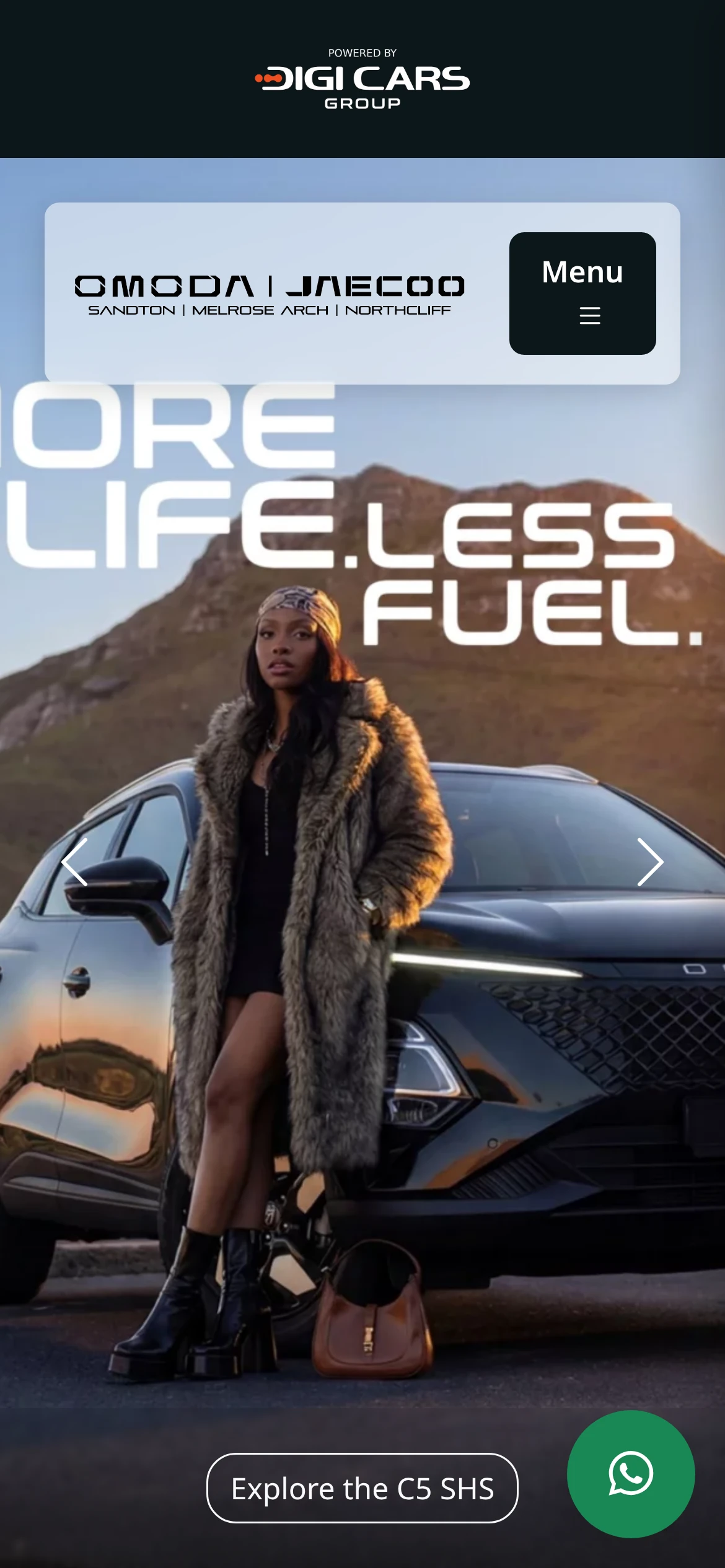
For Omoda & Jaecoo Digicars, the public work is best understood through that connected role: brand presentation, model content, stock discovery and a route into dealership enquiries. The gallery includes desktop and mobile homepage views, the model collection, an individual model page, vehicle stock and contact page. The project cover presents the real website in a desktop and phone mockup.
Visit Omoda & Jaecoo Digicars · Explore the group platform · Discuss a dealership website.
Omoda & Jaecoo Digicars
Project gallery.
Open an image and scroll to explore the page. Use the arrow keys to change images and Escape to close.



Keep the right things connected.
Digicars Group — Connected dealership platform
Standardised model pages, different DMS stock feeds and one lead endpoint across the Digicars Group website estate.
Websites designed properly, built properly and looked after properly
Figma design, WordPress built the way developers would build it, UX that turns visitors into enquiries, and hosting and support from the people who built the site.
API integrations with the systems South African businesses run on
We connect websites, CRMs, dealer systems, credit bureaus, vehicle finance, payments and AI, from Autotrader and Evolve to TransUnion, WesBank and OpenAI.
Start a conversation
Tell us what you are working towards. We’ll help you find a practical next step.